
24 Sep Assistive listening technology benefits everyone
Many businesses assume they don’t need assistive listening systems simply because no one has asked for them. But the real question is: how would they know?
Hearing loss is often invisible. Hearing aids can be hidden by hair, head coverings, or sit discreetly inside the ear. And not everyone who struggles to hear uses a device. That means a lack of visible need isn’t proof of absence—it’s a sign that assumptions may be getting in the way of accessibility.
Requests for assistance a business might receive are not an indication of the need among customers. Research has shown that people are likely to leave the premises rather than complain, then take their custom to where their needs are better met. Or they don’t visit in the first place, which might impact their quality of life and wellbeing.
UK equality legislation makes it very clear: public premises must be accessible to potential customers and not just current ones. That means every visitor, whether expected or no, should, fully engage with the service on offer.
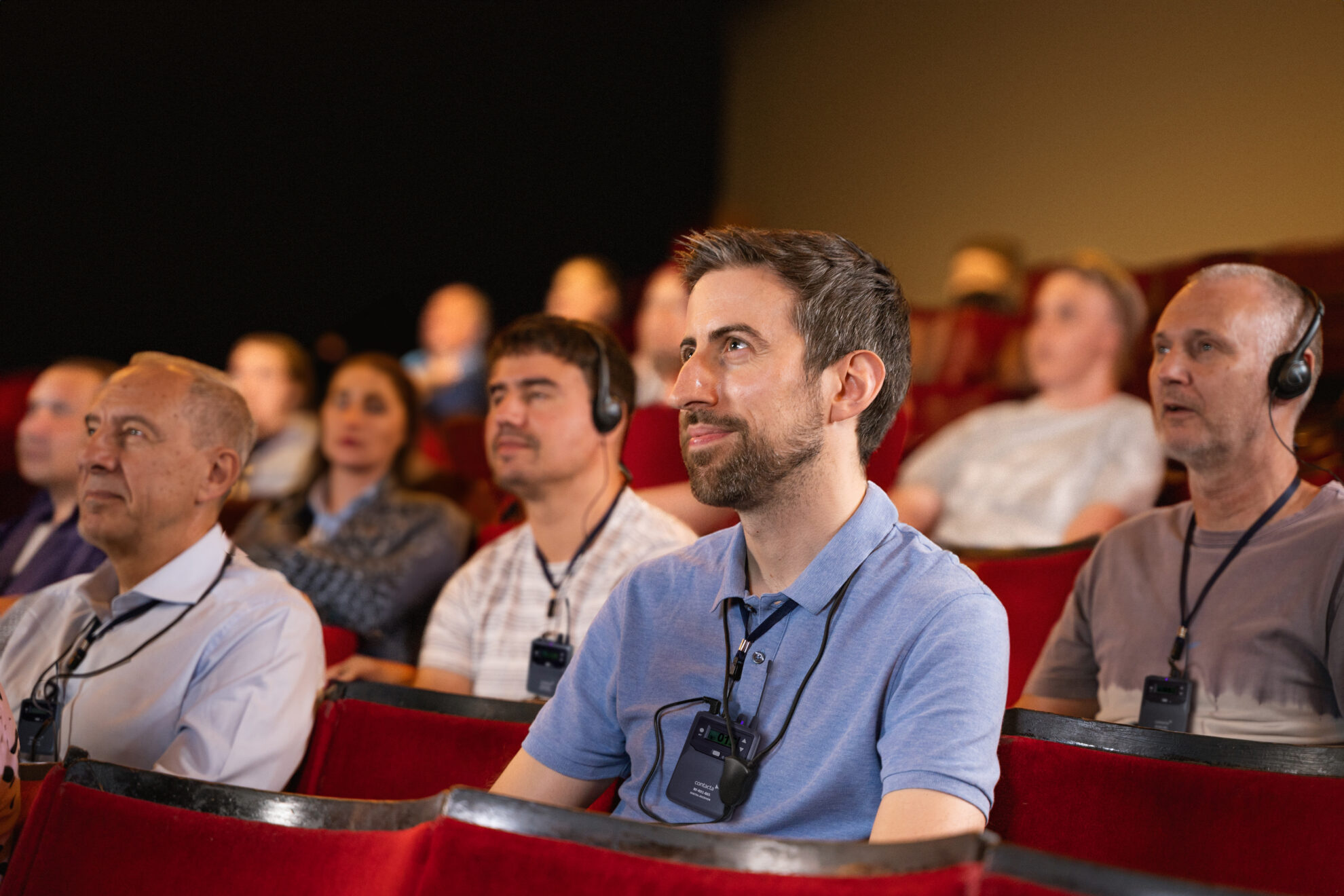
Technology such as hearing loops at till points and RF systems in theatres and concert halls can transform the experience for visitors who use hearing aids. The systems cut out background noise and deliver speech or music straight to a person’s hearing aid or cochlear implant when it’s set to the ‘T’ function.
But assistive listening technology has the potential to benefit everyone in the right situation.
Let’s take RF (radio-frequency) systems as an example. Hearing aid users would access sound from an RF transmitter via a receiver and an inductive neck loop. Anyone who doesn’t have a hearing device but struggles to hear clearly can you use the same system but with a pair of headphones.
Secure windows such as you find at a ticket office or reception area can be a barrier to communication for all of us, especially if there’s a lot of background noise. A window intercom system here will amplify the conversation between staff and visitors. Add in a hearing loop and that conversation is fed directly into a user’s hearing aid, creating clear communication for everyone.
With hearing loss on the rise—due to ageing populations and increased exposure to loud music and headphone use—assistive listening technology doesn’t just offer compliance with legislation and an inclusive service. It’s a smart, future-proof investment. It enhances reputation, increases footfall, and fosters loyalty.
 MADE IN THE UK: We’re proud to say our Contacta designed products are manufactured in the UK